

When selecting a health and safety training provider in South Africa, one of the most important differentiators to consider is the provider’s accreditation status. Understanding which accreditations to look for, and why they matter, is key to investing in quality health and safety training that not only satisfies the requirements of the Department of Employment and Labour (DoEL), but also genuinely equips your team to implement health and safety on the ground and appropriately manage emergencies.
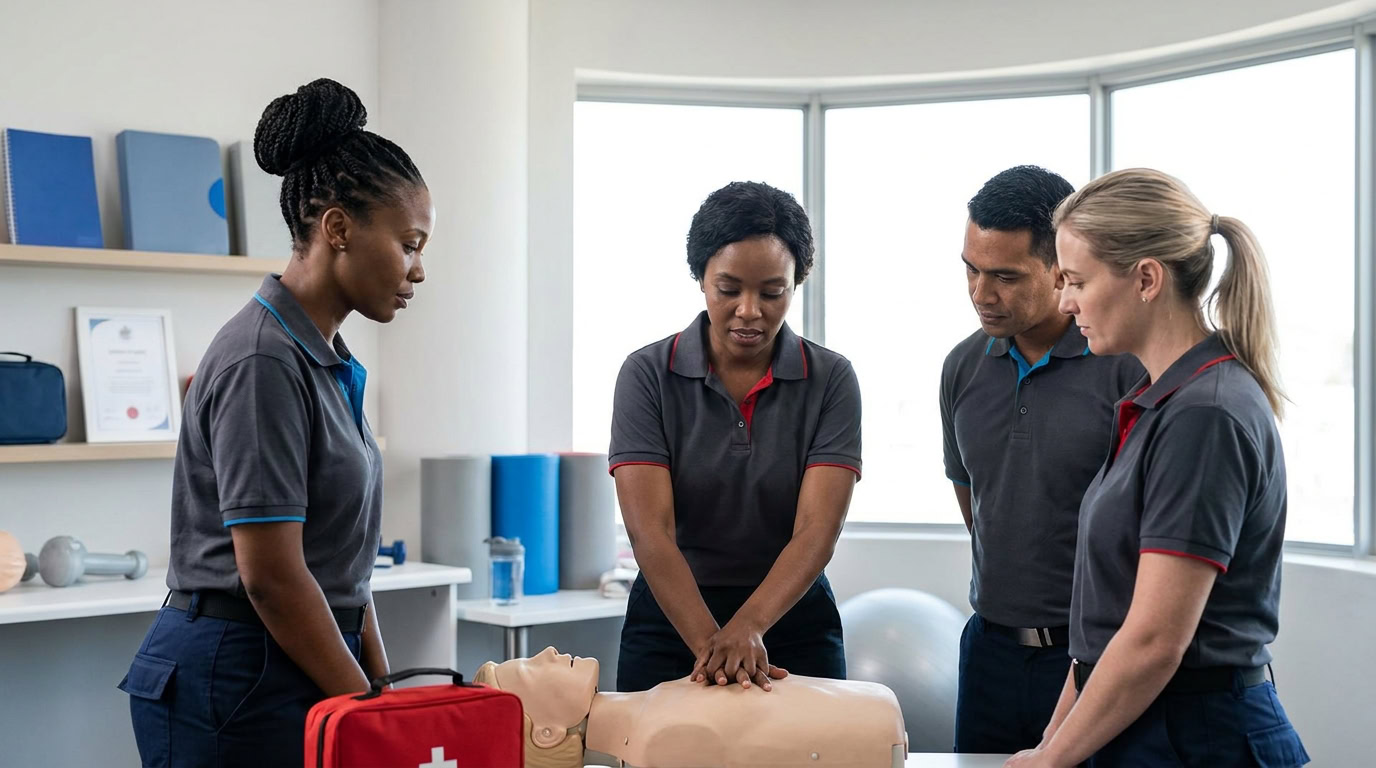
‘Accreditation’ means that a statutory body such as the Quality Council for Trades and Occupations (QCTO) or the Health and Welfare Sector Education and Training Authority (HWSETA) has formally evaluated the organisation and confirmed it meets national standards for training delivery. That evaluation covers training facilitators, course materials and assessments, assessment methods, statutory documents and requirements, training premises, facilities, and equipment. In South Africa, the QCTO oversees this process for trades and occupational learning, working with SETAs such as the HWSETA to inspect and assess training providers.
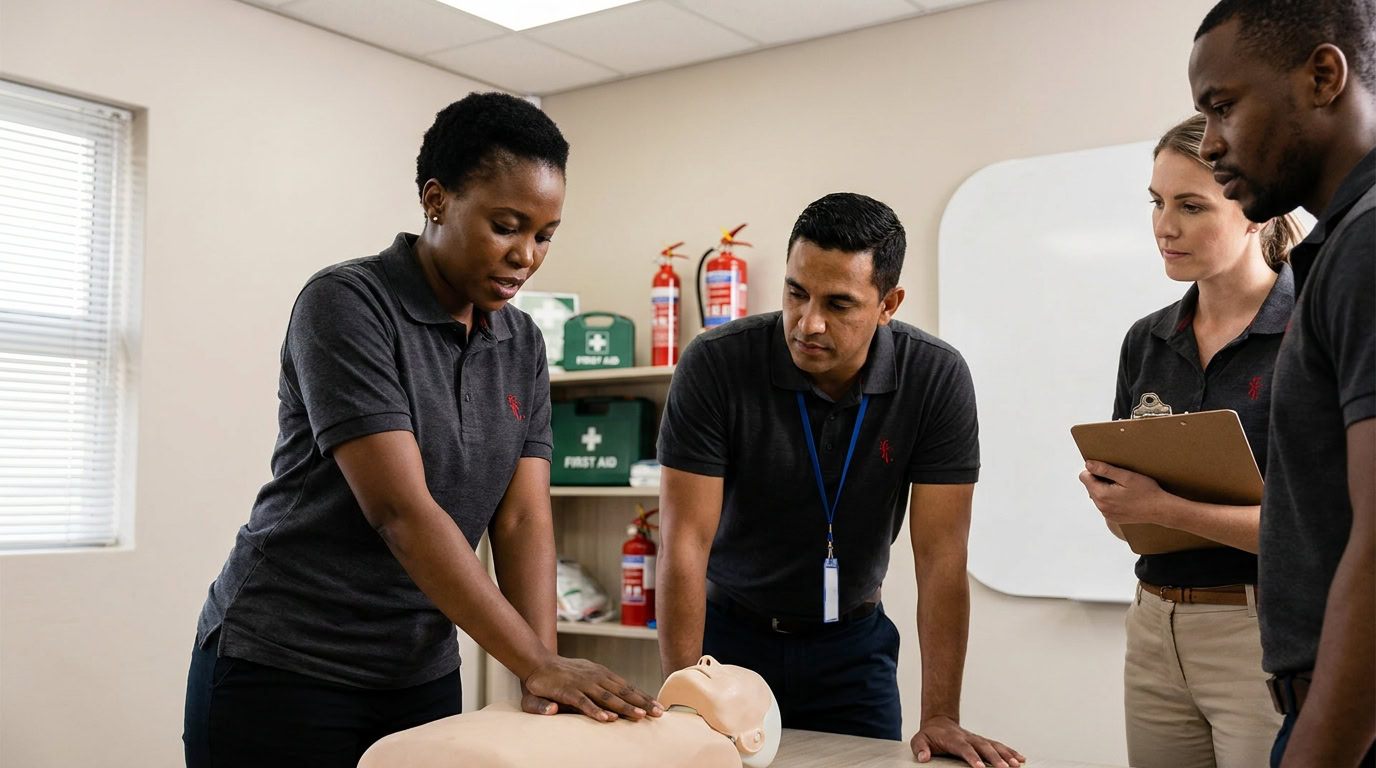
There are several implications for any business that books training through an accredited provider:
Training delivered by an accredited provider aligns with national legislation and occupational health and safety standards. The DoEL requires workplace health and safety training to be delivered by providers that hold the appropriate QCTO or HWSETA accreditation. Using an unaccredited training provider may result in your training not meeting applicable legal compliance requirements, potentially exposing you to non-compliance findings, notices, fines, or operational shutdowns.
Delegates who successfully complete training through an accredited provider receive recognised certificates that demonstrate completion of compliant, accredited training and are accepted by the DoEL as evidence that the correct and required training has taken place. These certificates are vitally important for proving health and safety compliance during inspections or incident investigations.
Accredited providers are held to strict benchmarks and undergo extensive quality assurance processes. This extends to all aspects of training, including the experience and qualifications of course facilitators, the equipment and facilities used during training, the quality of the course materials and assessments, etc. Using an accredited provider gives organisations peace of mind that every element of the service they receive is of a high quality.
The Occupational Health and Safety (OHS) Act 85 of 1993 places a legal responsibility for workplace health and safety on the employer. It is your responsibility to ensure that employees receive the proper training and supervision to perform their work safely, and that training is delivered by a recognised, accredited provider. In the event of a DoEL inspection or incident investigation, an inspector will check the accreditation status of your health and safety training provider. If that status cannot be verified, the employer may risk legal penalties.
The course content and assessments of accredited training providers are required to meet strict standards for both knowledge topics and practical skills elements. This means that accredited training is designed to produce a team member who has gained the necessary knowledge and hands-on skills to effectively implement health and safety on the ground and respond appropriately in an emergency. OHS compliance aside, accredited health and safety courses translate to real, tangible improvements in health and safety in the workplace.
Here’s what to verify when selecting a training provider:
Ask for the provider’s QCTO or HWSETA registration numbers and confirm with the relevant body that it is current. Also request to view the provider’s CI number, which shows that the organisation is approved by the DoEL. Accredited training providers will be able to provide these numbers as well as the related accreditation letters and certificates, which should also be clearly displayed on their website.
Accreditation is important, but so is the expertise of the facilitators delivering the training. Before choosing a training provider, consider the qualifications and practical experience of its instructors and facilitators. Trainers should hold recognised qualifications, be appropriately registered or recognised by relevant professional bodies where applicable, and have practical, real-world experience in their field. Look for providers whose team includes experienced paramedics, fire safety professionals, and OHS practitioners.
Before choosing a provider, ask directly: Will these certificates be recognised during a DoEL inspection or a client audit? A credible accredited health and safety training provider will be able to assure you that their training certificates clearly show that training received meets compliance requirements. In addition, it’s worth enquiring about the turnaround times for the issuing of certificates, as these certificates are essential compliance documents needed in hand as soon as possible.
National footprint
If you have multiple branches or offices across the country, it’s wise to select a training provider with training centres in different provinces. This saves costs by allowing you to train staff from different branches without flying them all to one central location. Absolute Health Services has training centres in Johannesburg, Durban, Gqeberha, and Cape Town. In addition, we offer on-site training at your venue for group bookings of eight or more delegates, providing convenience and cost savings.
Absolute Health Services holds both QCTO and HWSETA accreditation, as well as approval from the DoEL. We offer a wide range of HWSETA-accredited courses designed to meet the compliance requirements of the OHS Act, as well as QCTO Skills Programmes. Taught by experienced paramedics, fire safety experts, and OHS practitioners, our accredited health and safety courses combine theory and practical skill elements to equip delegates to implement health and safety measures and manage emergencies in the workplace.
If you would like to explore which accredited health and safety courses are right for your team, or have any additional questions regarding Absolute Health Services’ accreditations, please don’t hesitate to get in touch.
